How Much Protein Do You Really Need Each Day?
By Jenna Ruiz, RDN · 3 min read · Updated July 18, 2026
The RDA and what it actually means
The Recommended Dietary Allowance for protein in the United States is 0.8 grams per kilogram of body weight per day. For a 165-pound adult, that is about 60 grams.
This number is widely misunderstood. The RDA represents the amount sufficient to prevent deficiency in most healthy sedentary adults. It is a minimum designed to avoid a problem, not an optimum designed to produce a result.
Most of the research on body composition, strength, aging, and appetite regulation points to benefits at intakes well above the RDA, particularly for people who exercise or who are trying to lose fat while keeping muscle.
Practical targets by goal
These ranges reflect where the bulk of the evidence sits. They are starting points, not prescriptions.
- General health, sedentary: 0.8 to 1.0 g per kg (0.36 to 0.45 g per pound)
- Active adults and recreational exercisers: 1.2 to 1.6 g per kg (0.55 to 0.73 g per pound)
- Building muscle: 1.6 to 2.2 g per kg (0.73 to 1.0 g per pound)
- Fat loss while preserving muscle: 1.6 to 2.4 g per kg (0.73 to 1.1 g per pound)
- Adults over 65: 1.0 to 1.2 g per kg minimum, higher with resistance training
Should you use body weight or goal weight?
For people carrying significant excess body fat, calculating from current weight can produce an impractically large number. Using goal weight, or lean body mass if you know it, gives a more useful target.
A simple approach: use your target weight in pounds and eat roughly that many grams of protein per day if you are training. A person aiming for 170 pounds eats around 170 grams.
This is a heuristic, not a law. Being ten or twenty grams off on any given day changes nothing.
Distribution across the day
Total daily intake matters most. Distribution matters second, and it is worth getting right because it is nearly free to fix.
Muscle protein synthesis responds to a per-meal dose of roughly 0.4 grams per kilogram, or about 25 to 40 grams for most adults. Eating three or four meals in that range appears more effective than one enormous protein dinner.
The practical version: 30 grams at breakfast, 40 at lunch, 40 at dinner, and 20 to 30 from snacks. That is 130 to 140 grams without anything feeling like a chore.
Is high protein safe?
For healthy adults with normal kidney function, intakes in the ranges above have not been shown to cause harm in the available research, including in studies lasting a year or longer.
People with existing kidney disease, liver disease, or certain metabolic conditions do need individualized guidance. So do people who are pregnant. If that describes you, talk to your physician or a registered dietitian before making large changes.
This article is general education, not medical advice. It is not intended to diagnose, treat, or prevent any condition.
How to hit your number without thinking about it
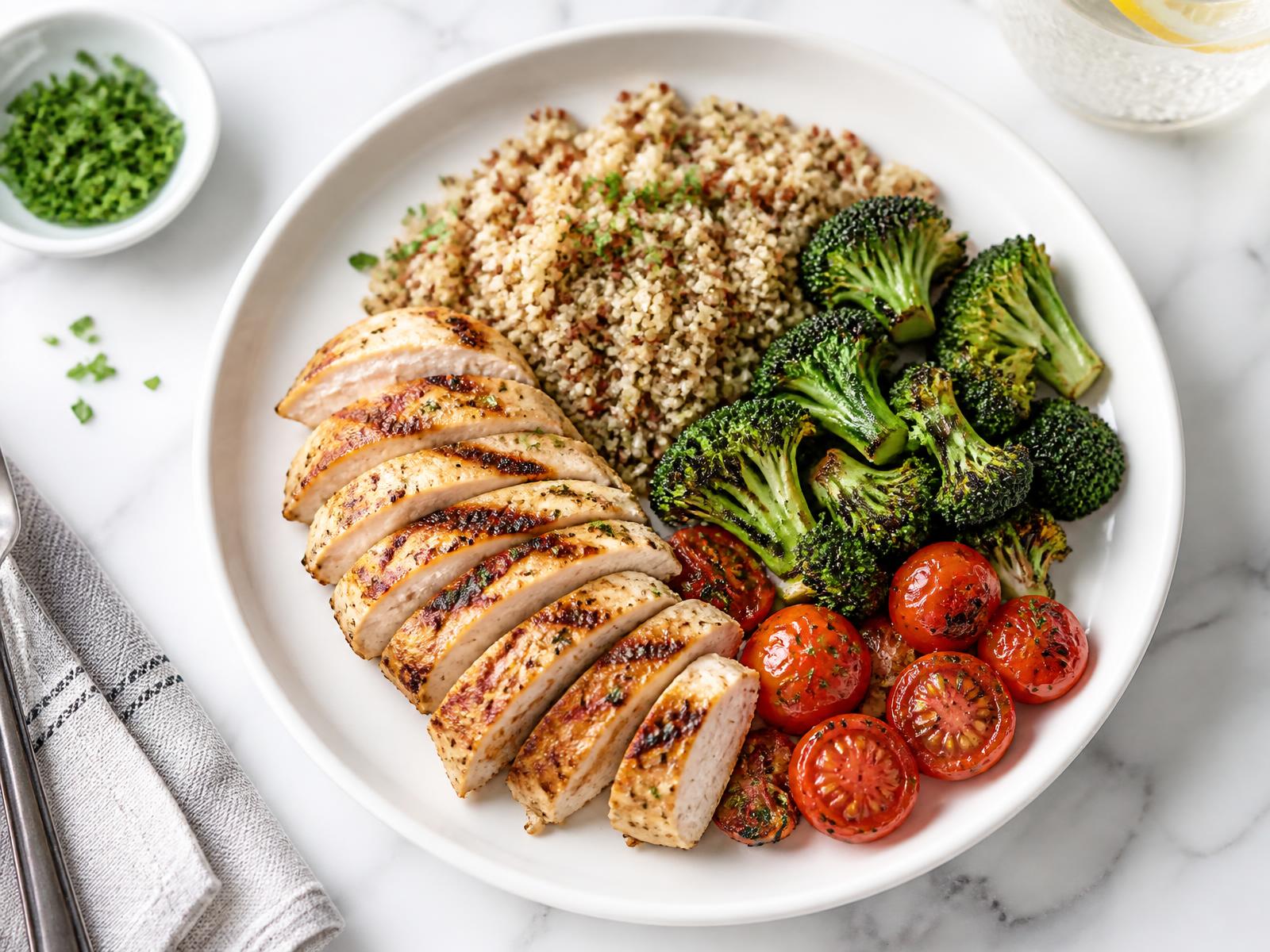
Anchor every meal with a protein source before you plan anything else. Decide on the chicken, then decide what goes with it. Most people plan in the opposite order and end up adding protein as an afterthought.
Track for two weeks, then stop. The point of tracking is calibration, not permanent surveillance. After fourteen days you will know by sight what 40 grams looks like on a plate.
Keep three high-protein rescue foods in the house at all times. Ours are Greek yogurt, eggs, and canned tuna. They close the gap on any day that got away from you.
Frequently asked questions
Sources & further reading
About the author
Jenna Ruiz, RDN — Jenna is a California-based registered dietitian nutritionist and recipe developer. She spent eight years in clinical nutrition before founding Protein Plate Co. to make high protein cooking practical for people with real schedules.